Hornby Island Huts
Location / Hornby Island
Project Type / Residential New Construction
Size / 1,200 sf
Completed / 2022
Photography / Andrew Latreille
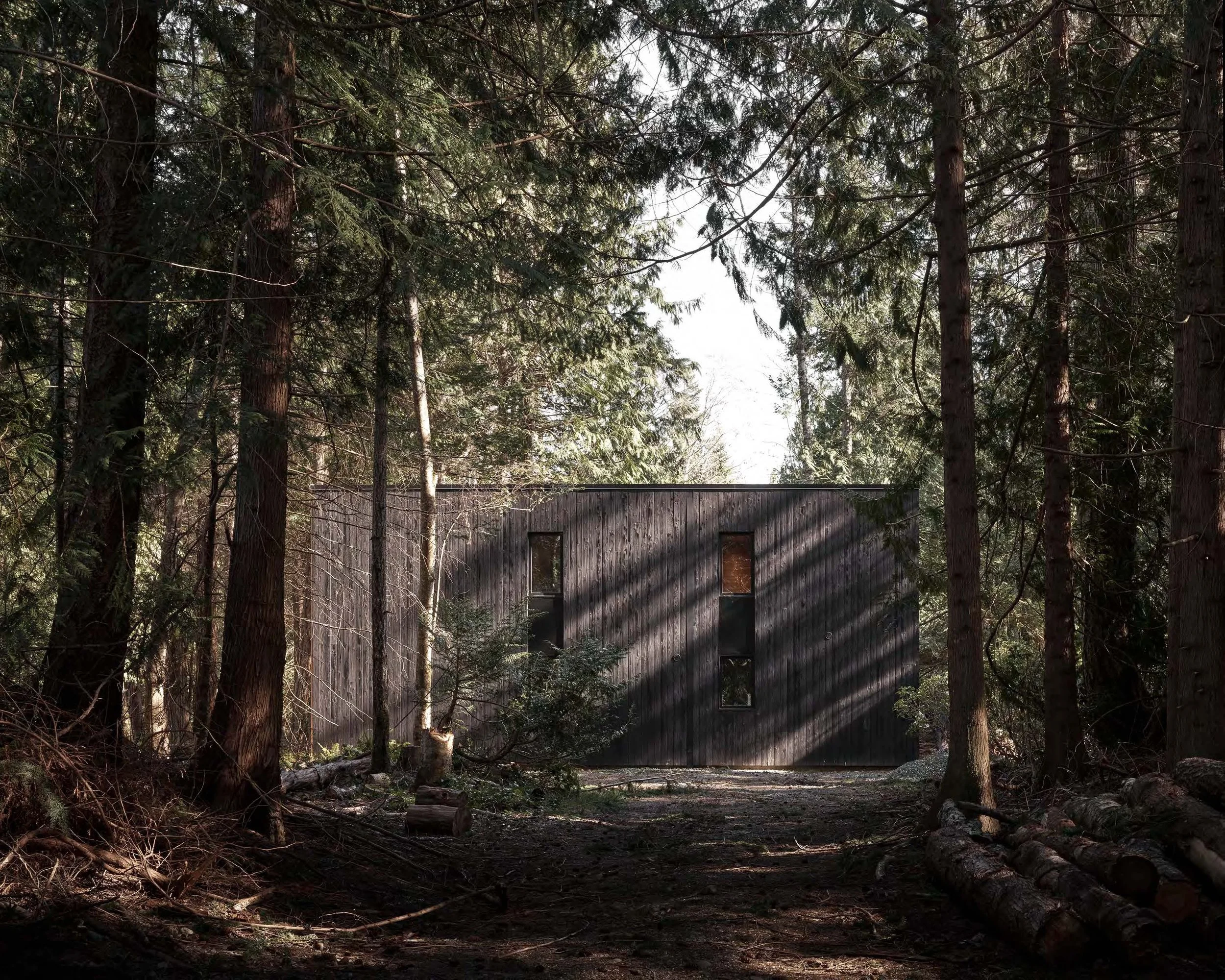
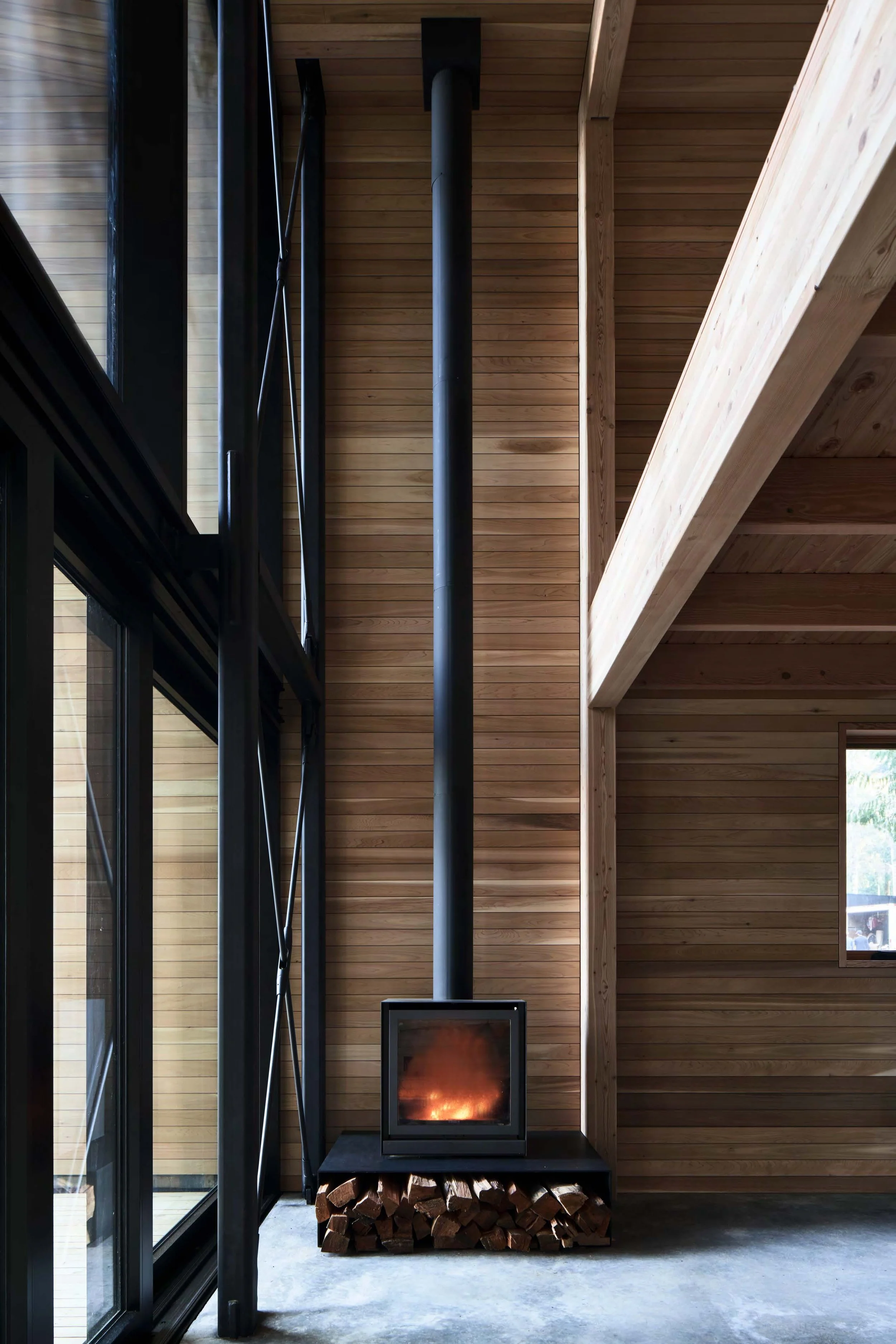
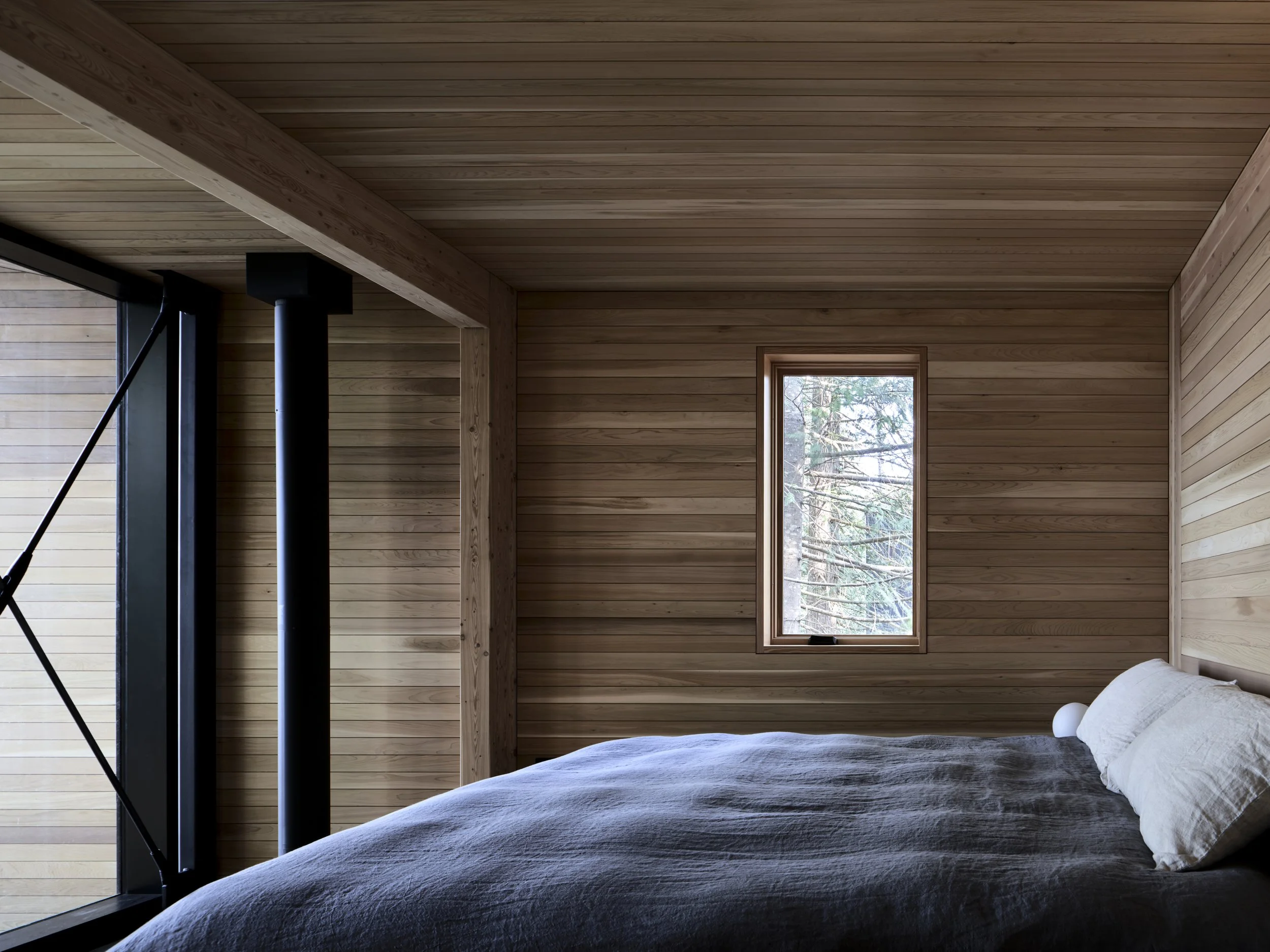
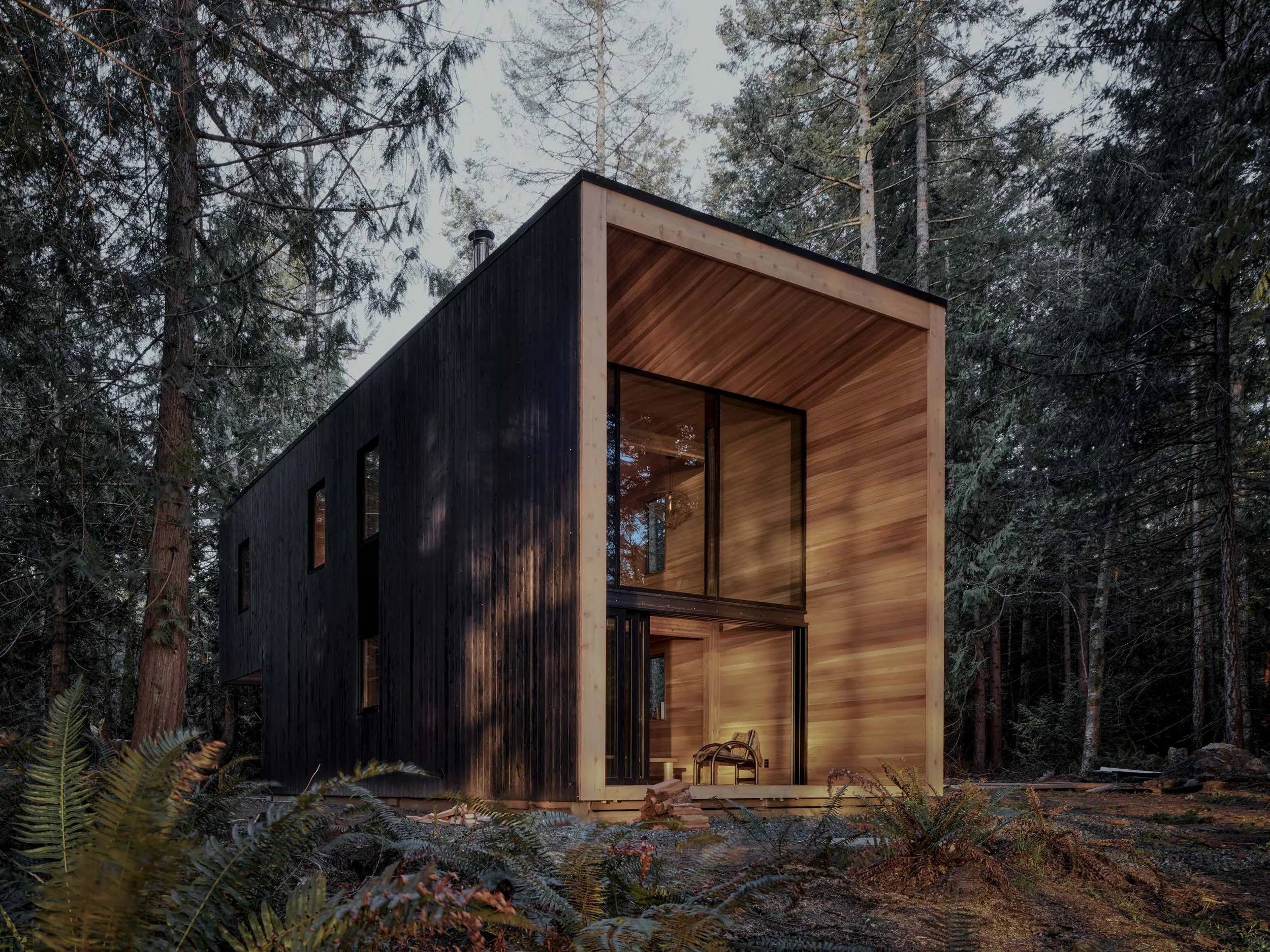
Leckie Studio’s in-house Wood Science Team focuses on research into sustainable prefabricated mass-timber construction. The studio applies this research to an increasing number of projects-including custom cabins for both private and commercial hospitality clients. Originally conceived to assist individuals and organizations in the design and construction of alpine structures in the wilds of British Columbia, the ‘kit-of-parts’ approach to prefabrication is widely applicable to virtually any remote location. A pair of ‘twin’ prefabricated cabins were built on a remote waterfront property on Hornby Island. The cabins are clad in charred red cedar, utilizing the ancient Japanese shou sugi ban technique. As a warm contrast, the cabin interiors are lined with natural red cedar, with a mild bleached finish to match the fir post-and-beam structural timber frame. A two-storey curtain wall glazing system provides an intimate connection to the forested landscape and ocean. Prefabrication allows for an economy and conservation of material and energy usage in the production and assembly of the building components. Each component is flat-packed onto pallets for shipping to the site. Site preparation is minimal and requires no use of heavy machinery for minimal site disruption. The design and manufacturing team adopted a zero-waste philosophy in both design and manufacturing for this project.
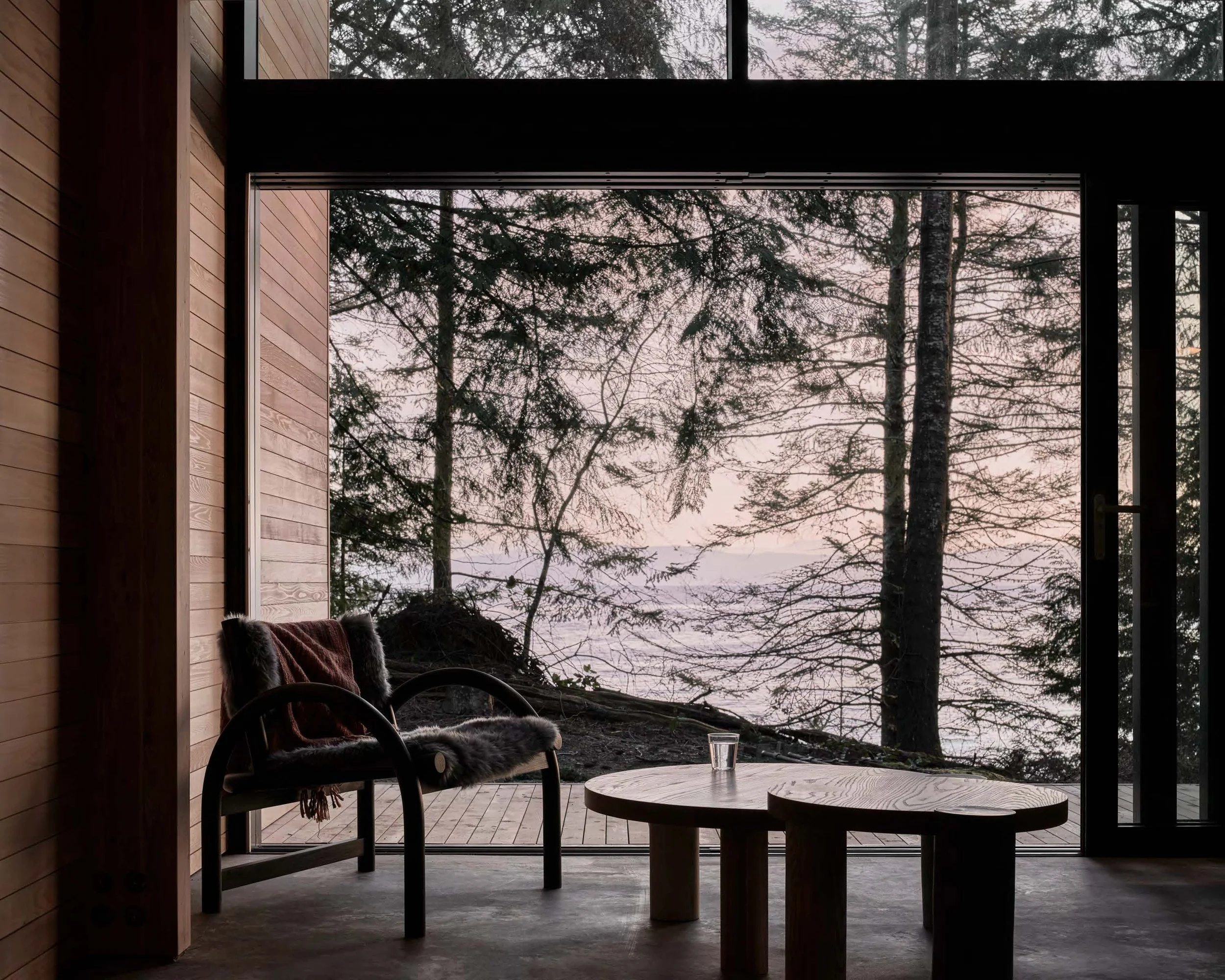
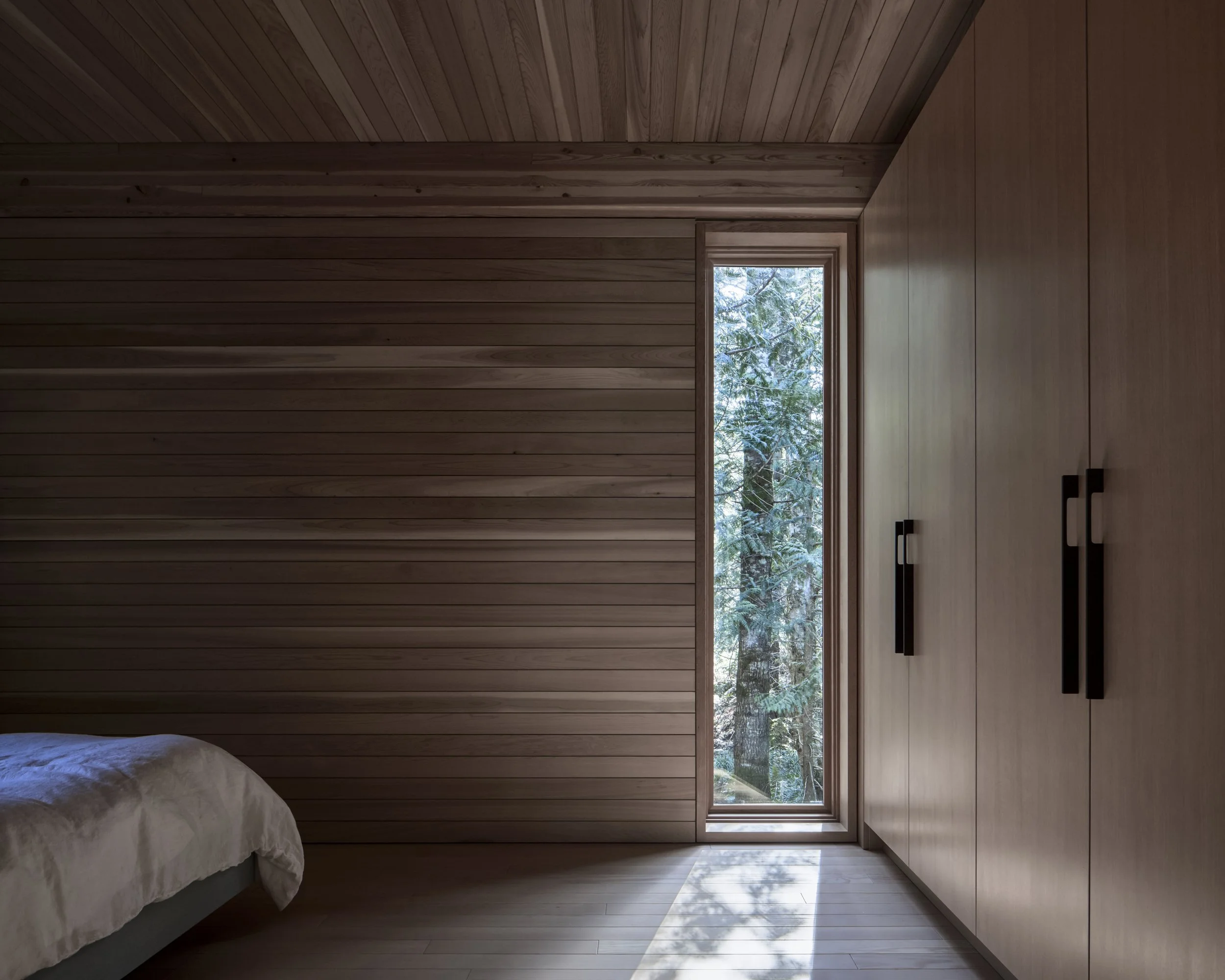
The Backcountry Hut Company provides both do-it-yourself and turnkey solutions to housing through the provision of a flat pre-packed assembly system with the following characteristics:
Prefabrication – the ‘kit of parts’ hut system is designed as an engineered wood post-and-beam skeleton that is then infilled with prefabricated panels. A simple nail-on window system is provided.
Ease of Assembly– the whole assembly can be erected by volunteers in the tradition of the community barn-raising process. The prefabricated wall and roof panels are sized to be lifted by hand and hoisted into place using a simple pulley and winch system.
Modular / Scalable – the basic structural module is designed as a 10’ structural increment. Modules can be combined to create increased floor area for additional sleeping quarters and living spaces.
Minimal Site Work – the system is designed to be deployed on any site that is accessible by truck and / or helicopter.
Mass Customization – there are a range of possibilities for interior fit-out options and exterior finishes.
In addition to backcountry applications (i.e. without road/vehicle access), the hut prototypes has received considerable interest from private individuals who are looking to erect prefabricated structures on both rural and urban ‘front-country’ sites (i.e. easily accessible by vehicle). Prefabrication allows for an economy and conservation of material and energy usage in the production and assembly of the building components. Each component is then flat-packed onto pallets for shipping to a location close to the site, then transported via air or off-road vehicles. Site preparation is minimal and requires no use of heavy machinery for minimal site disruption. Piling holes are hand-dug and concrete is then poured into formwork tubes to create the piles for the foundation. The Backcountry Hut company adopts a zero-waste philosophy in its design and implementation of its products.